

RomTale.cc enemies to lovers AI and every rom-com trope

Reel one, first frame
Romance readers choose by trope, and now so can you. Pick fake dating, enemies to lovers or snowed in, read the trailer paragraph, and you are cast opposite the AI woman who plays it best. She remembers every beat you have played.
- 16 leads, each built around a single trope, all AI characters
- 7 written beats on every beat sheet
- 24–55 their ages, with jobs to match
- 3 days with every lead on call, no card
The leading women of RomTale, one portrait each
Open every title card








Reel 1
Enemies to lovers AI and every rom-com trope
Ask a romance reader what they like and they will not describe a person. They will name a setup: two rivals, one inn, a pretend relationship that goes inconveniently real. RomTale is organised the same way. The trope comes first, the woman who plays it comes second, and the plot follows the beats the genre has always followed, with you in the other chair.
Slow, sweet, acid
The tones run from honey to vinegar. Tabitha Greene is sweet and tired and listening through a wall. Frances Ormerod is acid and has been conducting a feud in shop windows for years. Najwa Abdallah is warm and sleepless and quite sure she can handle a snowstorm. You choose a tone as you choose a trope, and the chat menu lets you shift it between friendly, flirting and romance whenever the scene calls for it.
Nothing here rushes. The point of a rom-com is delay, and nobody tells you that the delay is the reward until you are in it: the almost-kiss interrupted by a dog, the misunderstanding that could be cleared up in one sentence and is not. Each woman is built to stretch that delay as far as you want and to enjoy it.
You are the lead
In a book you watch two people fall in love. Here you are one of them, and the other one has opinions. She answers what you actually say, remembers what you said last Thursday, and will quote it back at the worst possible moment. That is where the comedy lives, and it is also where the tenderness comes from. People who come for the jokes tend to stay for the quieter scene near the end, where the banter drops for a line and the woman across from you says something plain. Because she has kept the plot notes, she can say it about something you told her three scenes ago.
Reel 2
The trope reel
Six opening beats from the reel, each one the first line of a scene. Pick the one that sounds like the evening you want.
Rivals · SharpThere is a walled garden in Cheltenham and it was mine.You booked it. I lost the paperwork. Kindly, of course.Shall we discuss the apology over cake, or over my dead body?Poppy Ransome Roll it
Grumpy and sunshine · GruffThe tour is cancelled. The lamp is off. I am off.You are still on my steps, holding a thermos.Is that tea? Give me the tea. Then go.Astrid Lowell Roll it
Fake dating · DryI accept the dinner, subject to seven conditions.Condition four: you do not squeeze my hand unless we are filmed.Condition five is that you do not like it.Simone Duval Roll it
Ex's best friend · WaryI know what happened. I know both versions.I came to tell you I like you, which is awkward.Say something before I take it back.Carys Bevan Roll it
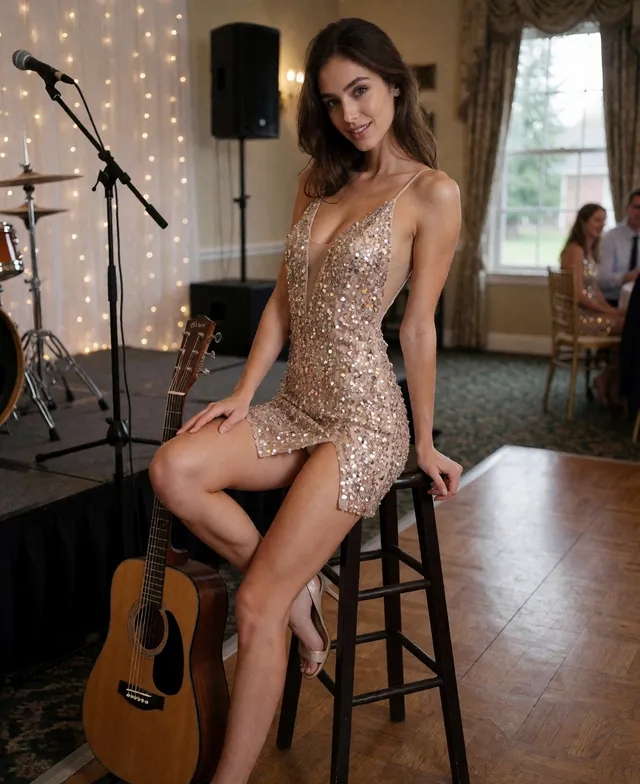
Thin walls · SweetYour guitar comes through the wall at six every morning.I have started to hum along, and that is your fault.Play the one from Thursday. I will bring the buns.Tabitha Greene Roll it
Snowed in · CosyThe roads are shut and the kettle works.I have been on shift all week and you are the first person who made me laugh.Stay put. I will find the blankets.Najwa Abdallah Roll it
Fake dating
The oldest bargain in the genre: you need a date, she needs a favour, and a set of rules gets drawn up that both of you will break by the second act. Simone Duval has seven conditions. The fifth is that you must not enjoy it.
Snowed in
Closed roads, one working kettle and a stranger with a sense of humour. Najwa Abdallah has seen the worst of winter from an emergency ward, and she is not afraid of a little ice, only of how much she has enjoyed your company.
Second chance
Someone you thought you had finished with turns up at the one event you could not skip. Carys Bevan is not an ex, strictly, but she knows your ex and she knows you, and she has the most complicated feelings of anyone on the reel.
Rivals
Two sensible adults, one walled garden, a scheduling error that may not have been an error. Poppy Ransome and Gloria Sandoval will both claim the other started it, and both will be right.
Reel 4
Roll the first scene
There is no script to learn and no software to fetch, and no paperwork stands between you and the opening beat.
Choose a trope
Scan the reel by trope or by tone, or let the site pick for you. Every card shows the trope and a trailer.
Press roll
The opening beat goes out as your first line, using up one of the 10 that a guest may send before registering.
Answer in character
Reply as yourself or as a version of yourself that is slightly braver. Suggested next lines are on hand if you freeze.
Keep the reel or reshoot
Return tomorrow and she remembers the plot so far. Or clear the scene from the chat menu and shoot it again from the top.
Start, continue, reshoot
You can begin at any beat. Many people roll the meet-cute, written the way the genre likes it, and others skip straight to the grand gesture to see how she takes it. Neither is wrong. If you want to take a scene back, the reshoot option wipes the chat and gives you a clean opening beat; if you prefer, you can keep the scene running for weeks.
If she texts first
During the opening run and on Plus a lead may write to you once you have been quiet for some time, timed to suit her local clock. It is a gentle prod rather than a demand, and a switch in your green room turns it off.
Reel 5
Beat sheet: where you are in the story
Seven written beats sit on every woman's page, in the order the genre usually follows. They are a map, not a rail. You can stand on any one of them and see where you came from and where it might go.
Meet-cute, written out
The first beat is the scene as written for you to step into: the walled garden, the thin wall, the crowded platform. It is short, specific and a little absurd, and its job is to give both of you something to be embarrassed about later.
Third-act breakup
Somewhere near the end the story pretends everything is over. It is the most disliked beat and the most useful, because it is where she says the true thing she has been avoiding. You can play it for all it is worth, soften it, or leave it out. The beat sheet lists it so that nobody is surprised.
Grand gesture
The last beat is the airport run, the rooftop speech, the shop window rearranged overnight. It is hers or yours to deliver, and the site offers a few lines to start from. A good gesture is small and exactly right; a bad one is large, and everyone clapping anyway.
Reel 8
How far RomTale goes, and what it is not
The mood is flirty, funny and romantic, and where a scene would otherwise turn explicit the camera swings to the window and the film runs out. That rule belongs to the studio and it applies to every plan.
What is not in the cinema
The women are invented, the tropes are borrowed from nobody in particular, and no lead can be visited or called. There is no film, no recorded voice and no shop. A portrait of each lead sits on her page, with a wider banner of her across the home page, and the picture side stops at those two. The ER doctor and the vet on the call sheet are characters; they do not give advice about health or animals, and they say so.
Reel 3
A trailer for each woman
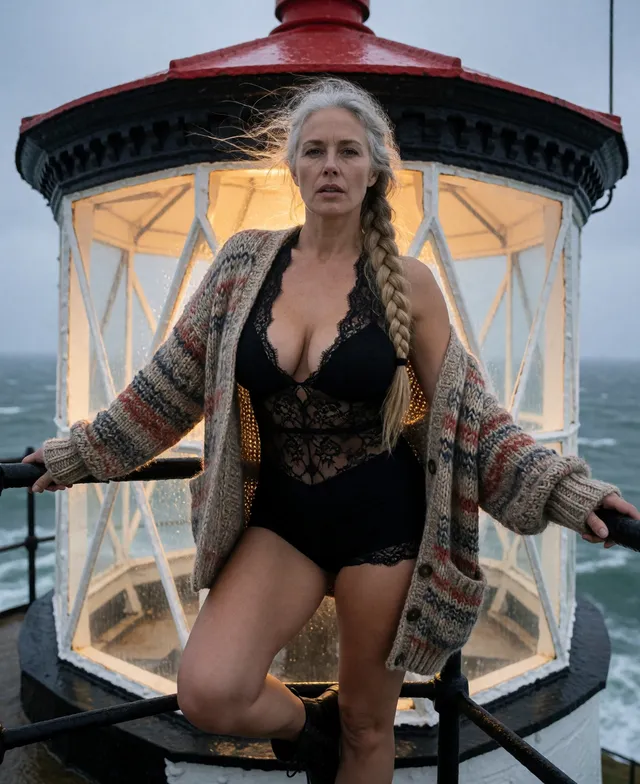
Every lead has a trailer paragraph on her title card: a short blurb, a tagline in capitals and a promise about what the first scene will feel like. Poppy Ransome, a wedding planner, sabotaged your booking and would like you to know it was well meant. Astrid Lowell keeps a lighthouse and hates visitors, in principle.
 Beatrice, 48 AI
In Stratford I know whose roof leaks and whose heart does.
town mayor · Read the title card
 Gloria, 37 AI
My green chile beat your special by a mile.
chef rival · Read the title card
 Anaïs, 24 AI
The roses went to the wrong wedding. Yours was the right one.
florist's apprentice · Read the title card
 Frances, 50 AI
Our window is better, and you know it.
rival bookshop owner · Read the title card
Thirty seconds of text
A trailer is quick to read and gives away only the setup. It tells you what she does, where she lives, what the trope is and what she wants from you, and it ends on a line she would say aloud. The rest of the title card is background: how she talks, where she draws the line, what she does when the cameras stop. Read it before you start, or skip it and find out in the scene.
Reel 9
The run and what it costs
Three runs, a column each. None of them renews unprompted, so no one has anything to cancel.
| On the bill | Opening run | Matinee | Plus |
| For how long | 3 days from audition | Afterwards, with no end date | 30 days, or 365 |
| Your lines | Uncounted | 10 each day | Uncounted |
| Leads on call | All sixteen | The first 3 you wrote to | All sixteen |
| She texts first | Yes | No | Yes |
| Price | Free | Free | $15 or $99 |
Opening run, matinee, Plus
A guest can speak 10 lines on set before being asked to sign in. An audition costs nothing and puts every lead on call for 3 days, no card involved. Afterwards the matinee tier lets 10 lines through per day, and your earlier scenes stay open. Plus is bought with USDT. The short run is 30 days and costs $15; the long run is 365 days and costs $99. The studio will not refund you unless the law forces it to, and the fine print has the exact wording.
Reel 7
Outtakes
A reel always has a few moments that did not make the cut, and the best of them are in the credits. This is where the studio keeps them.
Lines that did not make the cut
Dolly Fiorentino turned down a speech about destiny because she felt the extra on the left of the shot was crying. Lene Hartmann has been asked to say "it is not you, it is the dog" in six different tones. Beatrice Sherwood tried to give the opening line to the town council and was outvoted. The outtakes page is where we post these, and it doubles as the log of what has changed on the site.
Reel 6
The cast by trope
Sixteen women aged 24 to 55, sorted by the kind of story they carry. Every one of them is an invented adult with work she takes seriously.
Rivals and feuds
They would rather lose to anyone else, which is how you know.
Closed rooms and bad weather
Cold outside, warm inside, and no one in a hurry to leave.
Arrangements and mix-ups
A small lie or a wrong delivery, and then it is too late to explain.
Slow burns and long journeys
They have waited, one way or another, for a very long time.
Ages and hours
The leads run from twenty-four to fifty-five, and no card is written to look lower than the number on it. They keep the time of their own towns, so Ayesha Rahim may be on a night train across Anatolia while Harriet Pemberton is loading a van in Nashville.
Reel 10
Questions from the audience
Is there a third-act breakup?
If you want one. The beat sheet includes it, and you can skip it, soften it or play it for every drop of drama it has.
Does she remember the plot so far?
Yes. She keeps a few plot notes on what happened between you, you can read and amend them in the chat menu, and she picks the thread up where you left it.
How slow can it go?
As slow as you like. Most of the tropes depend on delay, and the women here are happy to stretch a near-kiss across a whole week.
Are the leads real?
No. They are invented AI characters with made-up pasts, each with a portrait of her own, and they cannot be called or visited.
What does it cost?
The audition is free and gives you 3 days of every lead. After that you get 10 lines a day, and Plus at $15 drops the limit.
How far does it go?
Flirty, funny and romantic. A scene that heads for the bedroom ends with the camera turning away.
Who is admitted?
Adults only, 18 or older. Every lead is a grown woman aged 24 to 55.
Credits
Roll the film
Choose a trope you have always liked, read her trailer and send the first beat. The scene is already waiting for your line.
Start the first scene